
Jeans craft ideas don’t get more practical than turning old denim into a rug you can actually use every day. If you’ve got a stack of jeans sitting in a “donate later” pile, this is your sign.
I used this YouTube tutorial as my reference and built this guide around the exact weaving method shown in the video. It looks simple at first, but the results feel high-end once you get your rhythm.
Watch the tutorial first (so the steps make sense)
Why a blue jean rug is one of the best recycled denim projects
Denim is thick, durable, and naturally grippy, which makes it ideal for rugs. If you’ve ever searched for denim recycle projects that don’t feel like clutter, this one checks the box.
- It’s a practical alternative to denim rag rugs that shed.
- You get that gorgeous mix of light and dark washes without dye.
- It fits farmhouse, boho, and neutral interiors.


Supplies you’ll need
Here’s what the tutorial method uses (plus a few “make life easier” upgrades):
- 4–8 pairs of old jeans (more for larger rugs)
- Sharp fabric scissors or a rotary cutter + mat
- Sewing machine (zig-zag stitch for joining strips)
- Iron + ironing board
- Bias tape maker (optional but helpful for folding strips cleanly)
- Strong thread
- Wooden board (or a sturdy frame)
- Hammer
- Nails
- Measuring tape
- Painter’s tape (for spacing marks)

How to weave a rug using old jeans (step-by-step)
This is the exact process shown in the video, written out so you can follow it without rewinding 20 times.
Step 1: Deconstruct the jeans
Cut off thick areas that will fight you later: waistbands, zippers, heavy hems, and bulky seams. What you want are flatter denim panels that are easy to cut into strips.
Step 2: Cut denim strips
Cut strips about 3.5 cm wide (this is what the creator used). Try to keep your width consistent so your weave stays even.
For a larger rug, the tutorial mentioned needing a lot of strip length (she estimated around 175 meters of denim strip for a big rug). Don’t let that scare you. Start smaller and scale up.
Step 3: Join strips into longer lengths
Use a zig-zag stitch to connect strips end-to-end. You can fully stitch your joins (faster weaving) or leave some joins for later (less visible stitching). In the video, fully stitching made the weaving easier, but the “no-stitch look” is cleaner.
Step 4: Press the strips
Iron your strips so they lie flatter and weave cleaner. If you have a bias tape maker, you can use it to help fold and press quickly, but an iron alone works.
Step 5: Make the DIY loom (board + nails)
Hammer nails into a board so they form two parallel rows. The tutorial used nails about 1 cm apart. This creates the structure you’ll wrap your warp threads around.
Step 6: Add the warp threads
Stretch strong threads back and forth around the nails so the threads run vertically across your loom. Keep the tension even across all threads.
The creator used tape marks to keep spacing consistent. A simple painter’s tape guide helps a lot here.
Step 7: Start weaving the denim
Take your denim strip and weave over and under the warp threads in a basic pattern:
- Row 1: over 1, under 1, repeat
- Row 2: under 1, over 1, repeat (so it alternates)
Pull each row snug, but don’t yank too tight or the rug will start narrowing. If you notice the sides pulling inward, loosen slightly and keep your tension more consistent.
Step 8: Join strips as you go
When you reach the end of a strip, connect a new strip and keep weaving. If you stitched your strips into longer lengths ahead of time, this step is basically “just keep going.”
Step 9: Finish the ends and shape the rug
When your rug reaches the size you want, secure the warp threads at the end. Knot, stitch, or bind off in a way that feels sturdy for floor use.
Finally, iron the rug to help the strips “remember” their shape and lie flatter.

7 DIY rug styles you can make from old jeans
Once you understand the basic weave, you can switch up the design without changing the method.
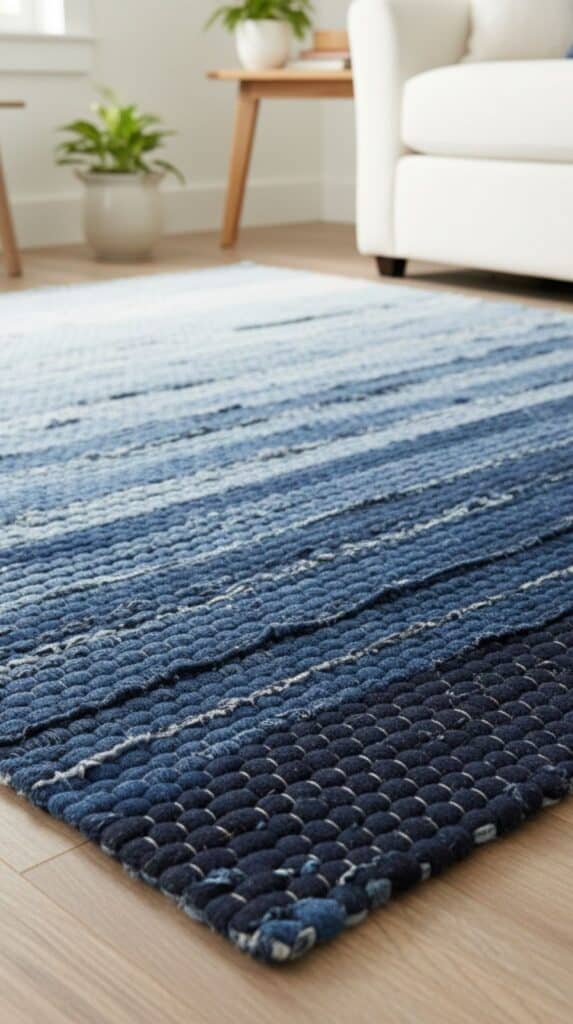
1. Classic flat weave blue jean rug
Alternate light and dark denim strips for natural striping. This is the easiest place to start and always looks polished.


2. Braided rag rug DIY style
If you want a no-loom option, braid denim strips and coil them into a round rug. This one is beginner-friendly and forgiving.


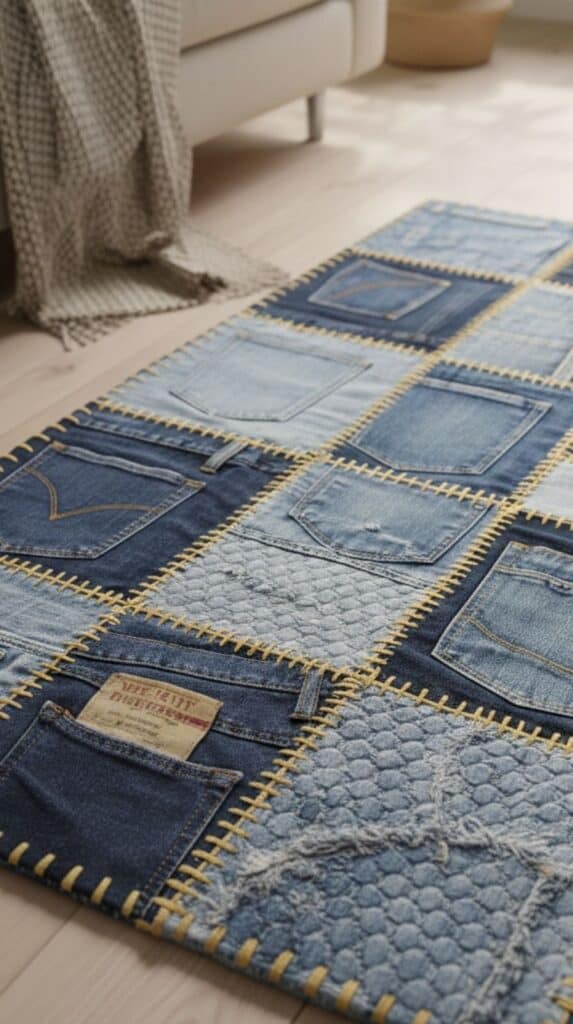
3. Patchwork woven rug (jean quilt ideas, but for the floor)
Mix different washes, seams, and even pockets for texture. If you love blue jean quilts, you’ll probably love this look.


4. Ombre denim rug
Sort denim strips from lightest to darkest and weave in that order. The gradient effect looks expensive without any extra steps.


5. Rustic frayed-edge rug
Leave a little fraying for a farmhouse vibe. This is a great way to lean into the charm of denim rag rugs without going too messy.


6. Chunky strip boho rug
Cut your strips slightly wider than the standard and weave for a thicker texture. It’s bold and cozy, especially for living rooms.


7. Denim + fabric mix rug (denim recycle projects with a twist)
Run out of denim? Mix in sturdy cotton or other thick fabric. The tutorial creator even used dresses and denim shirts to finish a larger rug.


Quick sizing guide (so you don’t overcommit)
- Door mat: start with 2–3 pairs of jeans
- Runner: 4–6 pairs of jeans
- Area rug: 8+ pairs of jeans (or thrift extra denim)
Tip: If you’re planning a full seating area rug, go bigger than you think so it doesn’t look “floaty” in the room.


Is this beginner-friendly?
Yes, it’s possible, but I’m not going to pretend it’s quick. Cutting, deconstructing, stitching, and ironing take time.
The weaving part is the fun part. If you prep your strips in batches (cut one day, stitch another day), it feels way more manageable.


Can you sell denim rag rugs?
Yes. Rugs photograph well, feel giftable, and fit the “recycled + handmade” trend. Once you’ve made a couple, you can list them on Etsy, Shopify, or even Amazon Handmade if you want to scale.
If you want more recycled denim projects you can actually sell, check out these related posts:


Final thoughts
If you’ve been hunting for recycle jeans projects that don’t end up as clutter, a blue jean rug is one of the most satisfying options. It’s functional, sturdy, and honestly looks like something you’d buy in a boutique.
If you want to turn this into a real side hustle, I break down what sells and why in my guide to crafts that actually sell. You’ll know what to focus on before you cut into your best denim.
