
Laser Cutting vs Water Jet: 10 Tips to Start Your Craft Business
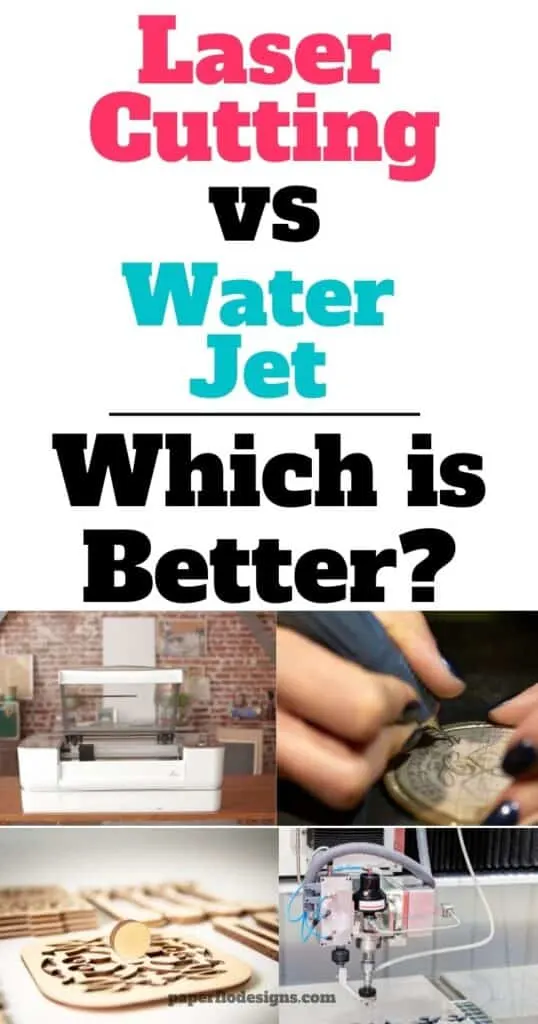
There are a few popular methods businesses use when it comes to cutting materials. Two of the most common are laser cutting and water jet cutting. Both methods have unique benefits, but which one is right for your business?
The main differences between these two methods are the type of material being cut, the material’s thickness, the cut quality, and accuracy. You will also find the advantages and disadvantages of each cutting method.
In this blog post, I will discuss the key differences and similarities between laser and water jet cutting.

I get commissions for purchases made through some of the links in this post. There is no extra cost to you. See my full disclosure here.
Key Differences Between Laser and Water Jet Cutting
Here are the main differences between laser and water jet cutting.
Material
Laser cutters can handle a variety of materials, including wood, plastic, metal, and composite materials. However, laser cutters cannot cut highly reflective metals.
On the other hand, waterjet cutters can cut a wide variety of materials, including reflective metals. You can also use it to cut stainless steel but plasma cutters do a better job of this.
An abrasive material is added to the pressurized water. The material is in the form of aluminum oxide, sand, silicone, or garnet particles.
The combination of water, the abrasive substance, and high pressure make waterjet machines capable of cutting through thicker materials.
Thickness
Both techniques can cut thick materials. But the precise thickness for laser cutting is 0.12″ to 0.4″; water jet cutters can cut 0.12″ to 0.4″ thick material.
Quality and Accuracy
A laser machine can produce a clean cut with superior accuracy; it is suitable for detailed and intricate designs, especially on thin materials like stainless steel for making jewelry or thin sheets of plywood.

On the other hand, water jet cutting is not as precise or accurate but works well for large-scale projects that require thick metals.
Types of Activities
Laser cutting can be used for a variety of activities, including etching and engraving.
Water jet cutting is mostly used for straight cuts in materials.
Cost
The cost of laser cutting depends on the material being cut and the type of activity being performed.
Generally speaking, water jet cutting is more expensive than laser cutting because it requires more specialized equipment. So, factor in the additional small parts in your operating costs.
Safety
Laser cutting is much safer, as the laser beam is not exposed to the outside environment.
Make sure that you use it in a room with proper ventilation to avoid breathing in toxic fumes.
If the room lacks access to ventilation then get an air extractor.
Water jet machines require operators to wear protective gear like safety goggles because they can be hazardous if operated improperly.
It’s recommended to wear ear protection because the waterjet systems can make a lot of noise.


Similarities Between Laser Cutting and Water Jet Cutting
Although there are differences between laser and water jet cutting, there are some similarities.
Speed
Both methods of cutting can be quite fast; this depends on the complexity of the project at hand.
Cost-effectiveness
Both laser and water jet cutting are cost-effective solutions for businesses that need to cut materials quickly.
They also eliminate the need for labor-intensive cutting processes.
Versatility
Both cutting methods can be used to cut intricate shapes and patterns in almost any material, including metals, plastics, composites, leather, foam, and glass.
High Quality
These methods are highly accurate and produce high-quality results. They give you precise cuts and allow for complex designs when you need them.
Final Thoughts
Laser and water jet cutting are popular methods for cutting materials in large and small businesses; each has unique benefits. The important factors to consider are the
- type of material
- machine costs
- material costs
- and the activity being performed.
One method may be more suitable than the other depending on your needs.
I hope this article has provided you with helpful insights into the differences and similarities between laser and water jet cutting.
