
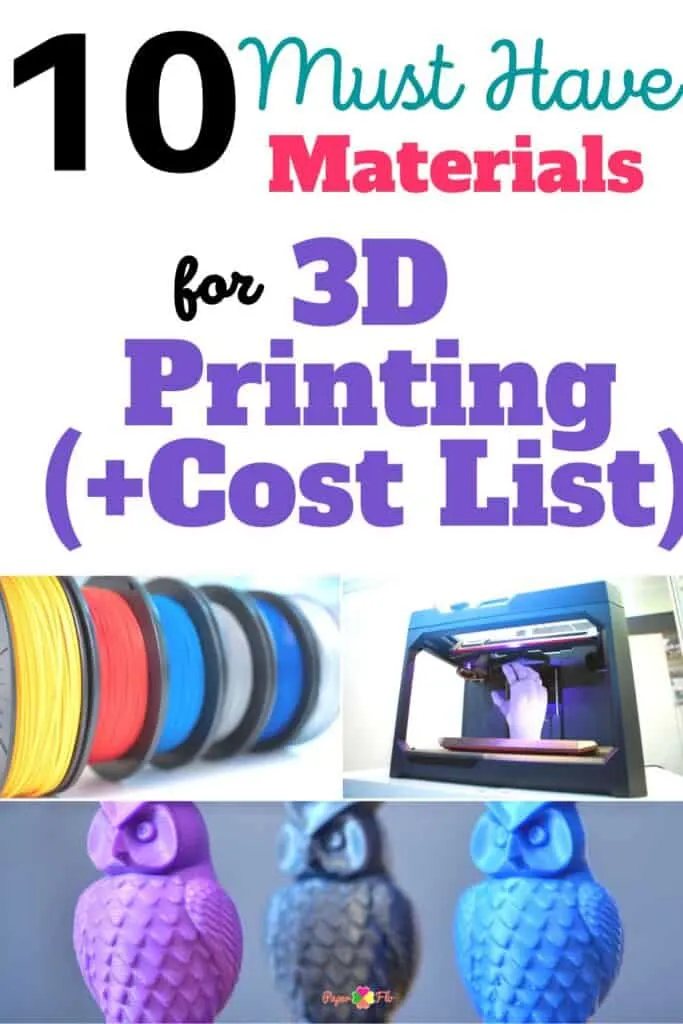
10 Must Have Materials for 3D Printing & Cost List
3D Printing has taken off in the last few years! From action-hero figurines to cake toppers, anyone can make them as long as you have the right materials.
In the past, 3d printing processes were used mainly by technicians for rapid prototyping in industrial applications. But in recent years, lots of people are starting small businesses with 3d laser printing machines.
They realize that there is a high demand for custom-printed projects and 3 D-printed parts.
Getting all the materials requires a significant investment so prepare yourself before you start buying them.

I get commissions for purchases made through some of the links in this post. There is no extra cost to you. See my full disclosure here.
Printing Materials.
The first step of starting a 3D printing business is knowing the different types of supplies you’ll need to get for the task and how much they will cost you. You don’t want the overall cost to eat into your profit margins.
What supplies do I need to make 3D Printed Projects?
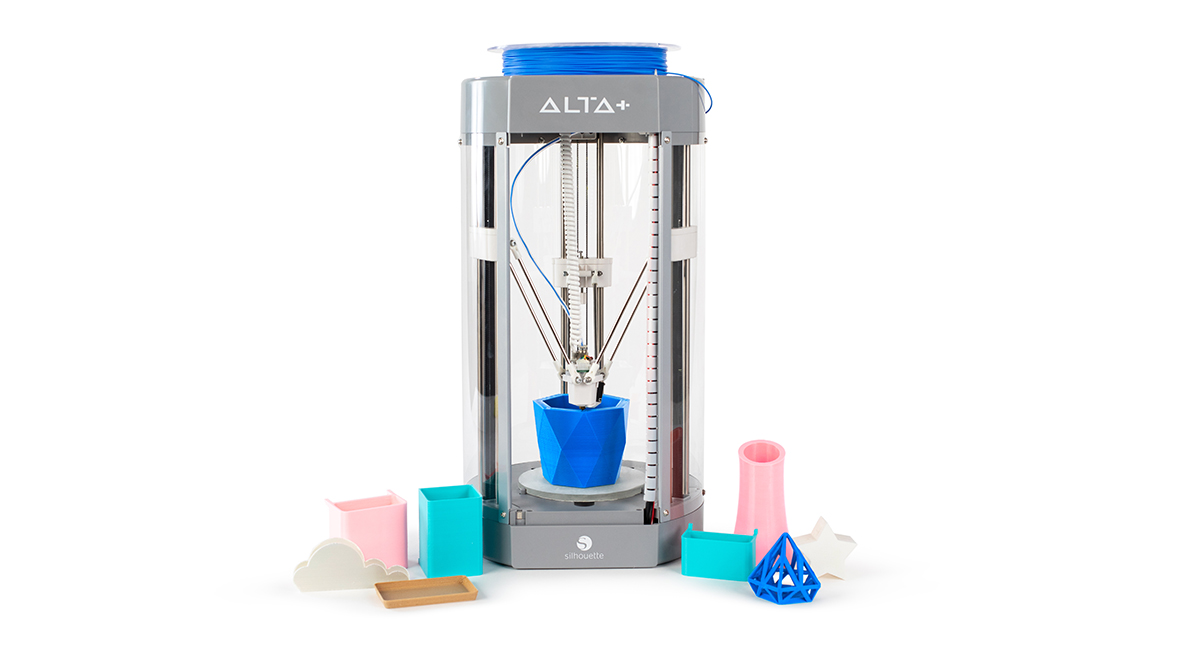
The first thing you’ll need is a 3D printer if you don’t already have one. There are also SLS (selective laser sintering) printers but these are for industrial use.
It will help you make all the designs you desire without breaking a sweat.
1. Printing Filament
There are different kinds of printer filament. Here are a few that you can use with a 3D printer.
- PLA filament – $20
- ABS filament – $22
- Flexible filaments
- HIPS
- PETG
- TPE
- Metal Filled
2. Standard resin
Resin is a printing liquid that is suitable for printing hobby toys, architectural models, artworks, sculpture models, protective shells, and assembly parts. It can also be used as a toughness additive.
You can get them in small quantities or larger ones. Here’s the price of 1 liter of resin (SLA Resin). – $23
3. FDM Printers
This is an industrial-grade 3D printer designed for professionals but can also be used by anyone who dabbles in 3D printing as a hobby. The average cost of an FDM printer like this is around – $1,600.
4. Acrylonitrile butadiene styrene (ABS Sheet)
ABS is a hard, rigid plastic with good toughness and impact resistance. This thick plastic sheet is excellent for very cold temperatures and resists cracking. It’s good for interior uses such as appliance parts, tub and shower walls, and also for as well as outdoor applications. – $22
5. 3D Print Stick
The 3D print stick combines an extra-large (120ml) environmentally sized serving of adhesive paired with an extra durable woven mesh applicator. – $23
- Precision Cutting Pliers
- Face masks
- Portable tool box
- Electric Polishing Machine
- Sanding heads
- Stainless steel Wire Cutters
- Hand Drill
- Drill Bits
- Printing Cleaning Brush
- Prying Tool
- Printer nozzle cleaner
- Sanding Sticks
6. Support Structures
Glass Platform – $50
Heat Bed Leveling Parts – $9
7. Software
In order to get your designs to your 3 D printer, you’ll need a compatible printing software program.
There are various factors to consider when it comes to choosing software. Think about what kind of projects you want to print, how long you want to use the program, and how much you’re willing to spend.
You can buy the software as a one-time purchase or a monthly subscription.
Some people avoid the high cost of a monthly subscription and choose to use an open source software like Inkscape or Gimp to design their files.
Open-source software is a great option because it’s capable of making complex designs.
8. 3D printing services
If you do not want to make your 3D project from scratch – designing, printing, and cutting – then you can choose to use a 3 D printing service.
These are great for when you don’t have much time to design, or design isn’t your forte.
Here are a few designers that provide printing services. Check their reviews to make sure that they have good print quality.
9. A pair of scissors
Before you start printing, you may want to pre-trim your printing filament, and this is what you’ll need the scissors for. However, you can choose to leave it as it is. This is an optional step.
10. A sealant spray
Spraying the 3D printed projects with a sealant spray will also protect the raw material depending on what type of material you use.
If the 3D project will be mostly outdoors, use UV light resistant ink to protect it from the sun.
What kind of 3D printed projects will you make?
Knowing what supplies you need to make 3D printed projects is a good start but you also need to consider the maintenance costs.
As time goes on, you’ll need to replace or upgrade different materials.
Hopefully, this list has given you an idea of the average price range to keep up with your 3 D printing business.
Want to save this for later? Pin it to your favorite DIY board on Pinterest!
Feel free to save this post to your 3D printer tips board on Pinterest or to write a comment if you found this helpful.
More creative craft ideas!
If you loved this list of ideas, I hope you will try my other easy DIY craft ideas!
- 10 Best Small Things to 3d Print: Useful Objects
- 21 Ways to Make Money Quickly with 3d Printing: Beginner Tips
FAQ – 3D Printing Materials and Costs
Q1: What are the essential materials for 3D printing?
A1: The essential materials for 3D printing include filament (PLA, ABS, etc.), resin, and metal powder, among others.
Q2: How much does 3D printing filament typically cost?
A2: The cost of 3D printing filament varies by type and brand. On average, PLA filament can cost around $20 to $30 per kilogram, while specialty filaments may be more expensive.
Q3: What factors affect the cost of 3D printing materials?
A3: Factors that affect the cost of 3D printing materials include material type, brand, quality, and the supplier’s pricing strategy. Specialty and high-quality materials tend to be more expensive.
Q4: Can I use third-party materials with my 3D printer?
A4: Yes, many 3D printers allow the use of third-party materials, but it’s essential to check your printer’s compatibility and settings to ensure optimal results and safety.
Q5: Where can I purchase 3D printing materials?
A5: You can purchase 3D printing materials from various sources, including online retailers, local stores, and specialized suppliers. Popular online platforms include Amazon, MatterHackers, and more.
Q6: Are there eco-friendly 3D printing materials available?
A6: Yes, there are eco-friendly 3D printing materials such as biodegradable PLA and recycled filaments. They are designed to reduce environmental impact and are becoming increasingly popular.
